Home  |   Museum  |   Bomber Command  |   Aircrew Chronicles  |   Aircrew Losses  |   Nose Art  |   BCATP  |   Lancaster  |   Media

Bomber Command Aircrew Chronicles
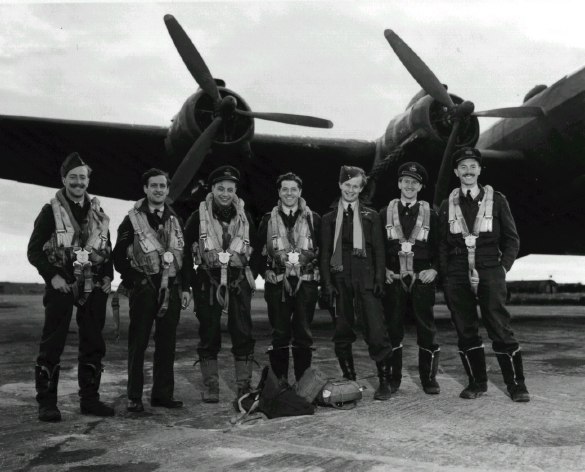


F/O L. Corbeil Bomb Aimer, Sgt J. McCart F/E, F/Lt B. Austen W/Op, F/O S. DeZorzi Nav,
F/Lt Robert Clothier Pilot, F/Lt T. Murdoch M/U gunner, F/O B. Fitzgerald Rear gunner;
No. 408 Squadron Royal Canadian Air Force.


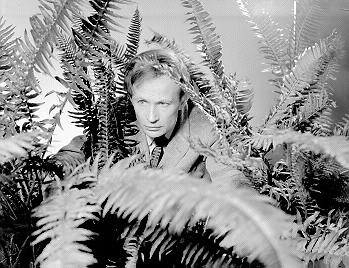
"The Beachcombers" was arguably the most successful CBC Television drama of all time. The longest running series drama in Canadian television history, it ran from 1972 until 1991 and has been translated into five other languages, and shown in 37 different countries. The program, which included a good measure of comedy, featured the small town exploits of a group of competitive seafarers who tried to salvage logs that drifted onto the beaches of British Columbia. Filmed on location in Gibson, British Columbia, the program starred Bruno Gerussi as Nick, Rae Brown as Molly and veteran Canadian actor, Robert Clothier as "Relic," an unscrupulous adversary and rival beachcomber to "Nick."

It may surprise many to learn that during World War II, "Relic" was a bomber pilot with No. 408 Squadron RCAF. In his crew picture he looks almost child-like, certainly very young as were most Bomber Command pilots. Even then he appears to have been a bit of a character. In the photo he is wearing a scarf and has a pistol in his hand.

The photo of Relic's crew is one of the finest we have seen of a Canadian Bomber crew and it was chosen to be on the title panel of Canada's Bomber Command Memorial.


Related Articles
Canada's Bomber Command Memorial

Robert Clothier was born in Prince Rupert, British Columbia in 1921 and attended St. Georges School in Vancouver. He joined the Royal Canadian Air Force on October 19, 1940. Following Initial Training School at 1 ITS in Toronto, he learned to fly at 1 Elementary Flying Training School (Malton, Toronto) on Tiger Moths and at 4 Service Flying Training School in Saskatoon. Clothier arrived in the UK during August 1941.

Following training at 16 OTU, Sgt. Clothier was posted to 408 Squadron based at RAF Syerston where he flew nineteen operations on Hampdens from March 26 until July 9, 1942. His navigator was Santy De Zorzi.


Robert Clothier at 16 Operational Training Unit.


408 Squadron Handley-Page Hampden

Clothier's was quickly introduced to the high loss rates being experienced by Bomber Command as the night following his first operation, the squadron lost three of eight aircraft during a mine laying or "gardening" operation.

Of his Hampden operations, Clothier recalled, "the odd time when they shot up aerodromes in Holland and went in low over Rostok to blast enemy guns and searchlights after bombs had been dropped." He told of "going down to the deck" to bomb the Heinkel works at 3500 feet and of his aircraft being rocked by the explosions. During an operation on 26/27 April, the squadron Operation Record Book recorded that, "Clothier's aircraft came down to 500 feet at 0223 hours and shot up (the town of) Kropklin with machine guns."

"There were lots of times when we were all on our own," Clothier recalled. "We didn't have the navigational aids and the scientific instruments for bombing. Flak was the chief danger in those days. There were few night-fighters and the bombers always went out in a full moon." They carried their own flares and marked their own targets.

Clothier's friends told of the time he tried a stall turn on a Hampden with a full bomb load aboard and the bomber did a complete upside-down flip. Always a practical theorist, Clothier had figured out his own scheme to out-smart the searchlights. Going into Mannheim, he had his chance. Coned by lights, he did the stall turn thus evading the predicted flak but found that it wasn't so good being upside down in a heavy aircraft full of bombs. "We could do lots of things with the Hampdens," Clothier said, "They were gluttons for punishment."

Following his Hampden operations with 408 Squadron, it appears that Clothier was repatriated to Canada and then again posted overseas during March 1944.

Following four-engine training at 1664 Heavy Conversion Unit, Clothier was posted again to 408 Squadron, that was now based at Linton-on-Ouse, having somehow arranged to be reunited with his Hampden navigator, F/O Santy De Zorzi, Clothier flew his first operation on the Lancaster Mk II (Bristol Hercules powered) bomber on the night of June 12/13. The other crewmembers were F/O L.J. Corbeil (Bomb Aimer), F/O A.J. Austen (Wireless Operator), F/O K.M. Murdoch (Mid-upper Gunner), F/O R.E. Fitzgerald (Rear Gunner), and Sgt. J. McCart (Flight Engineer).

In Clothier's logbook entry for 2 July, he writes, rather understatedly: "Circuits and Landings... Shakey Do... Pranged... Cat B". Clothier is so nonchalant about that day's flight, one might consider it inconsequential, but he and his crew very nearly lost their lives. While practising 3- and 2-engine landings, Clothier was conducting a 3-engine touch-and-go in Lancaster DS621 with one engine powered down and feathered. On climb out, the two engines on the side opposite to the feathered engine simply quit... possibly a fuel problem. Climbing out, the Lancaster, now with only one working engine, was in very serious trouble. A less experienced pilot would have panicked in such a situation, but Clothier, who had 1,110 flying hours at that time, was able to belly land his Lancaster safely. Clothier's skill and calm in an emergency situation likely saved the crew, who were no doubt too low to use a parachute.


Logbook entries as Clothier begins flying Lancaster Mk II's.

Cloutier's last of his eighteen operations on the Lancaster Mk II was on August 8, 1944. The squadron then converted to the Halifax Mk VII which he first flew in combat on August 27th, completing five combat operations on Halifaxes.

Cloutier's flew his last combat operation on September 11 and was repatriated to Canada on September 26, 1944.

F/L Clothier was featured in an RCAF News Release that referred to him as, "The first pilot to do two complete tours with 408 (Goose) squadron. F/L Bob Clothier of Vancouver, B.C. (1979 Waterloo Road) figures the toughest part of any trip is the start and the finish - the takeoff and the moment when you're coming down getting ready for the wheels to hit the deck. That's when the stomach muscles begin to tighten, according to F/L Clothier. Not that the rest of the stuff is "a piece of cake" but the "veteran" 22-year-old skipper always felt more at home when up there, plenty high, with lots of room to manoeuvre."

W/C R.A. McLernon recommended F/L Clothier for a Distinguished Flying Cross referring to his, "having completed 45 sorties (256 hours 40 minutes). Flight Lieutenant Clothier has completed two tours of operations on heavy bombers in an exemplary manner. During these two tours he attacked practically every heavily defended target in Europe including Essen, Mannheim, Stuttgart and Hamburg. On all occasions he pressed home his attacks with very great determination and inspired his whole crew with great confidence. His courage and coolness were at all times of the highest order despite the intensity of the defences encountered, and never did he permit his bombs to be dropped unless he was certain that they would fall on the target. Flight Lieutenant Clothier, by his skilful leadership and operational ability, has moulded together one of the finest crews that this squadron has ever known. He is admired by those serving under him and also by his superiors. He is indeed a splendid example of what a fine operational pilot should be. Therefore, I recommend that he be awarded an immediate Distinguished Flying Cross.

"F/Lt. Clothier was awarded the Distinguished Flying Cross on December 5, 1944, the citation reading,


This officer has completed numerous sorties in the role of pilot,
involving attacks on most of the enemy's heavily defended targets.
On all occasions he has pressed home his attacks with great determination
and by his personal example of courage, coolness and confidence
has set an example which has inspired all with whom he has flown."


As Clothier lay recuperating from this terrible accident, he was dealt another, even more devastating, personal blow -the death of his older brother John on March 6, 1945. After completing two tours as an air-gunner, John had re-mustered and become a Bomber Command pilot, just starting his third tour with 432 Squadron. Tragically, their aircraft had been shot down by the British Coastal Defence Guns.

Following the war, Clothier studied architecture at the University of British Columbia and also attended the Royal Academy of Dramatic Arts in London. As well as having a successful television career in which he played more than fifty roles, Clothier was a highly accomplished stage actor.



'Beachcomber' actors Relic (Robert Clothier)
and Bruno Gerussi


Robert Clothier was also an accomplished artist and sculptor. His first exhibition at was at UBC in 1956 when he won first place for "Three Forms."

Mr. Clothier, who was a longtime resident of the Capilano Highlands area of North Vancouver, suffered a stroke in 1996. After his stroke, Mr. Clothier taught himself to paint with his left hand.

Robert Clothier passed away in 1999. He was described as a modern-day Renaissance man. Jackson Davies, who worked with Clothier on The Beachcombers, said he and his late friend often shared a great laugh over the fact that the character of Relic was very different than the actor. Said Davies: "He was a very dignified man... a true professional to work with." Clothier was married to actress Shirley Broderick.

It seems that very few people knew that "Relic," like the vast majority of his contemporaries, did his duty when freedom was threatened.

Robert's brother was a bomber pilot as well. Sadly, F/Lt John George Clothier was killed when his 432 Squadron Halifax failed to return from an operation on 7/8 March 1945.

[ some info courtesy Jerry Vernon ]


The smiling airman in the centre of the crew photo (to the left of Bob Clothier) was the crew's navigator, F/O Santy Joseph De Zorzi.

Born in Italy, he was living in Toronto, Ontario when he enlisted in October, 1940. He trained at #1 Air Observers School and #1 Bombing and Gunnery School from which he graduated in August, 1941.

Commissioned in 1943, he was awarded the Distinguished Flying Cross in November, 1944. The citation reads, "As navigator, this officer has completed numerous sorties including such targets as Mannheim, Cologne and Essen. His ability has been outstanding and throughout he has displayed great keenness and zeal. He has played a worthy part in the successes obtained."

Ron Bates, Santy De Zorzi's nephew, recalls, "He was my brother's and my hero and played a huge role in our growing up, especially as kids during the summers at his Haliburton cottage. He had the highest praise for Bob Clothier who he was convinced was the best pilot in the RCAF. His picture (following the awarding of the DFC) made the Toronto newspapers and we were all so proud."


Bomber Command Museum of Canada